Be Proactive About Prevention
Colorectal cancer is the second-leading cause of cancer-related deaths in America — but the good news is that more than 90% of those cases are curable if diagnosed early, usually through a colonoscopy. During a colonoscopy, our board-certified gastroenterologists can find and remove growths called polyps even if they aren’t yet cancerous. Colonoscopies give us an understanding of your overall gut health. If you show any signs of diverticulosis, hemorrhoids, IBD or another condition, we’ll be right by your side to develop a personalized treatment plan to meet your needs.
When you trust your health to the specialists at UChicago Medicine AdventHealth, you can have peace of mind knowing our doctors are among the best and brightest in the nation. We prioritize continued education that keeps us current on the latest breakthroughs and state-of-the-art technologies in colorectal care. You deserve only the best when it comes to your health.
What Is Colon Cancer?
Colon cancer is a disease in which malignant (cancer) cells form in the tissues of the colon. The colon is part of the body’s digestive system, which removes and processes nutrients, such as vitamins, minerals, carbohydrates, fats, proteins and water from foods and helps pass waste material out of the body. The digestive system is made up of the esophagus, stomach and the small and large intestines. The colon (large bowel) is the first part of the large intestine and is about 5 feet long. Together, the rectum and anal canal make up the last part of the large intestine and are about 6 to 8 inches long. The anal canal ends at the anus, the opening of the large intestine to the outside of the body.
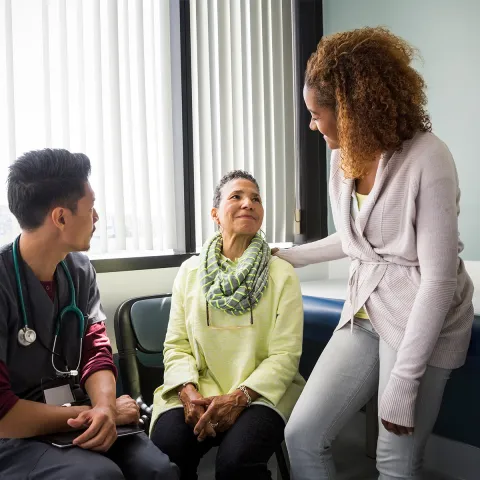
Find Colon Cancer Care You Can Count On
You’ve got this, because you’ve got us. Find the expert care and support you need to face colon cancer and reclaim your life.
Colon Cancer Symptoms and Risk Factors
Signs of colon cancer include blood in the stool or a change in bowel habits. The following signs and symptoms may be caused by colon cancer or other conditions. Tell your doctor if you experience any of these:
- A change in bowel habits
- Blood (either bright red or very dark) in the stool
- Diarrhea, constipation or feeling that the bowel does not empty all the way
- Feeling very tired
- Frequent gas pains, bloating, fullness or cramps
- Stools that are narrower than usual
- Vomiting
- Weight loss for no known reason
Your personal health history affects your risk of developing colon cancer. Risk factors for colorectal cancer include:
- African descent
- Being obese
- Having a family history of colon or rectal cancer in a first-degree relative (parent, sibling or child)
- Having a personal history of cancer in the colon, rectum or ovaries
- Having a personal history of chronic ulcerative colitis or Crohn's disease for eight years or more
- Having a personal history of high-risk adenomas (colorectal polyps that are 1 centimeter or larger in size or that have cells that look abnormal under a microscope)
- Having inherited changes in certain genes that increase the risk of familial adenomatous polyposis (FAP) or Lynch syndrome (hereditary nonpolyposis colorectal cancer)
- Having three or more alcoholic drinks per day
- Older age
- Smoking cigarettes
One Procedure for Peace of Mind
Colorectal screenings should start at age 45. If you have Type 2 diabetes, Crohn’s disease, ulcerative colitis, Lynch syndrome or have a family history of polyps, you have a higher risk of colorectal cancer and should plan a screening before the age of 45.
Our expert team of doctors and nurses comes to work every day with the same goal: making sure you feel confident with your treatment and comfortable during your stay. And your colonoscopy shouldn’t take long — it’s a simple outpatient procedure that usually lasts just an hour.
- Preparing for Your Colonoscopy
-
For a proper examination, the colon must be clean. You’ll need to follow a strict liquid diet before the procedure. You may also be asked to drink a special fluid to flush your system as part of your colonoscopy preparation. Click below to select the preparation your physician prescribed and download instructions to follow at home.
- During Your Colonoscopy
-
You’ll remove all clothing and jewelry and put on the provided gown. You’ll be asked to lie on your left side with your knees pulled up to your chest. You’ll then be given a relaxing sedative that will make you feel drowsy or cause you to fall asleep. An injection of air into the bowel will help your doctor get a clear picture. A water jet and/or suction device may be used for cleaning purposes. The doctor will take photos of your colon and typically remove any polyps (large polyps may be left until a follow-up procedure can be scheduled).
- After Your Colonoscopy
-
You’ll be taken to a supervised recovery room where you’ll stay until you’re feeling alert and your blood pressure and pulse are stable. Your doctor may discuss your results with you or schedule a follow-up visit. When you’re ready, you’ll be released to the family member or friend you’ve brought to drive you home.

Know Your Colon Cancer Risk
When it’s caught early, colon cancer is treatable and often curable. Our free and confidential assessment can help you understand your colorectal cancer risk and give you a great starting point for discussing preventive care strategies with your doctor.
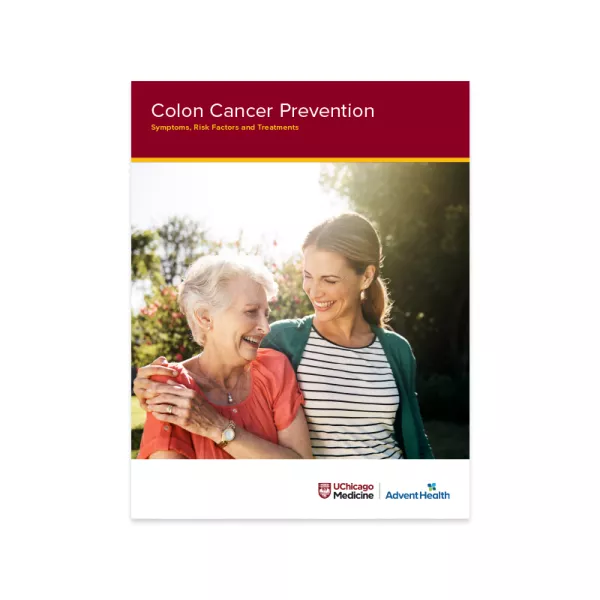
We’ll Be Your Guide
Knowledge is power — especially when it can protect your health and well-being. This free guide on colon cancer was created to educate and empower you by answering the following questions:
- What are the symptoms of colon cancer?
- How can I reduce my chance of developing colon cancer?
- Exactly how invasive is a colonoscopy?
- What’s the best treatment method?
Feel Confident With Oncology Experts in Your Corner
No matter what diagnosis you face, our compassionate oncologists are here to deliver the expertise you deserve on your journey to remission.
Learn more about other UChicago Medicine AdventHealth General Oncology Specialties and Services.
-
Gastrointestinal Cancer
We provide advanced treatments tailored to address gastrointestinal cancers, including those affecting the stomach, colon, rectum, liver, pancreas and other digestive organs.
-
Lung Cancer
With expert oncologists and top-of-the-line diagnostic testing, the whole-person care at UChicago Medicine AdventHealth is tailored to provide a proactive approach to lung cancer.
-
Breast Cancer
At UChicago Medicine AdventHealth, we provide low-cost breast cancer screenings and leading-edge breast cancer treatments catered to your specific needs and challenges.