
Renew Your Strength With Trusted Cancer Treatment
We know how quickly a breast cancer diagnosis can change your life and the lives of those you love. We also know the unshakable strength of the human spirit, the power that lies in a strong support system and the ever-evolving possibilities of modern medicine. Our team of leading breast cancer specialists at UChicago Medicine AdventHealth comes face-to-face with it every single day, treating patients and participating in hundreds of clinical trials.
Our network has breast care locations in Chicago’s western suburbs that are designed with your comfort, convenience and healing in mind. Our compassionate experts, including board-certified oncologists, use state-of-the-art technology to identify and treat various breast concerns, all with a focus on whole-person care. We offer everything from smart screenings that give you answers to proven treatments that meet your needs.

What is Breast Cancer?
Breast cancer is a type of cancer that forms in the cells of the breast. It can occur in both men and women, but it's far more common in women. Breast cancer usually begins in the milk ducts (ductal carcinoma) or the lobules (lobular carcinoma) of the breast tissue.
Like other forms of cancer, breast cancer occurs when cells begin to grow uncontrollably, forming a tumor. These cancerous cells can spread (metastasize) to other parts of the body if left untreated.

Find Breast Cancer Care You Can Count On
You’ve got this, because you’ve got us. Find the expert care and support you need to face cancer and reclaim your life.
Overcome Breast Cancer With a Dedicated Team by Your Side
Information can be empowering. Learn more about your risks for breast cancer, as well as our approach to detecting and treating it.
- Breast Cancer Prevention and Early Detection
-
While there's no guaranteed way to prevent breast cancer, there are steps you can take to reduce common risk factors. Here are some strategies for breast cancer prevention:
- Maintain a Healthy Weight: Obesity increases the risk of breast cancer, especially after menopause. Maintaining a healthy weight through a balanced diet and regular exercise can help reduce this risk.
- Exercise Regularly: Engage in regular physical activity. Aim for at least 150 minutes of moderate-intensity exercise or 75 minutes of vigorous-intensity exercise each week.
- Limit Alcohol Consumption: Alcohol consumption is linked to an increased risk of breast cancer. Limiting alcohol intake to no more than one drink per day, or avoiding alcohol altogether, can help reduce this risk.
- Quit Smoking: Smoking is associated with a higher risk of breast cancer, especially in premenopausal women. Quitting smoking can improve overall health and reduce the risk of many types of cancer, including breast cancer.
- Breastfeed, If Possible: Breastfeeding can lower the risk of breast cancer, especially if done for a year or longer.
- Get Regular Screenings: Participate in regular breast cancer screenings, such as mammograms and clinical breast exams. Early detection can lead to better outcomes.
- Know Your Family History: Be aware of your family's medical history, particularly regarding breast cancer and other types of cancer. Some people may be at higher risk due to genetic factors, such as mutations in the BRCA1 and BRCA2 genes.
Symptoms of breast cancer may include a breast lump, dense breasts, changes in breast size or shape, dimpling or puckering of the skin, redness or flaky skin around the nipple, nipple discharge (other than breast milk) and other changes in the appearance or feel of the breast tissue.
Early-stage detection through breast cancer screenings, such as mammograms or biopsies, and prompt treatment greatly increase the chances of successful outcomes. Treatment options for breast cancer may include surgery, radiation therapy, chemotherapy, hormone therapy, targeted therapy or a combination of these approaches, depending on the type and stage of the cancer.
- Quick Answers With Diagnostic Technology
-
A concerning lump or pain can make you anxious for clarity. At UChicago Medicine AdventHealth, we understand that waiting for these answers can keep you from being fully present in your everyday life. It’s why our imaging experts and pathologists aim for same-day test results whenever possible, because the quicker we have answers, the faster we can plan for any challenges that lie ahead. Across our comprehensive Breast Care programs, we’re equipped with some of the latest in genetic counseling, testing, imaging and minimally invasive diagnostic technology, including:
- BRCA tests
- Digital and 3D mammography
- Fine-needle aspiration
- High-definition breast MRIs
- Minimally invasive stereotactic breast biopsy
Living an empowered life means taking control of your health. So stay on schedule with mammograms, know your family history and visit us regularly so we can monitor any unexpected changes.
- Breast Cancer Treatments With UChicago Medicine AdventHealth
-
Being part of a strong network of care means that we can offer comprehensive breast cancer treatment for the broadest range of conditions. Across our network of renowned breast cancer programs, we have specialists in treating the following types of breast cancer:
- Ductal carcinoma, including ductal carcinoma in situ (DCIS) and invasive ductal carcinoma (IDC) and all IDC types: tubular, medullary, mucinous, papillary, cribriform
- Inflammatory breast cancer
- Male breast cancer
- Paget's disease of the breast
- Phyllodes tumors of the breast
- Recurrent and metastatic breast cancer
- Lobular carcinoma, including lobular carcinoma in situ (LCIS) and invasive lobular carcinoma (ILC)
MammoSite Therapy
This system is used to deliver internal radiation therapy to breast cancer patients after surgery. MammoSite is an internal therapy in which the radiation source is placed inside the breast, allowing it to target only the part of the breast where the cancer was found.
- Support for the Entire Journey
-
We’re here to help you fight more than cancer cells. We’re here to help you fight your fears and keep your faith. Whatever the stage and whatever your need, your dedicated team will be with you from testing and diagnosis through treatments, side effects and remission. Throughout your breast cancer care, we offer the following services to support you:
- Breast reconstruction
- Cancer rehabilitation
- Mastectomy bra-fitting services
- Support groups
- Wig fittings
Our goal is to help you live your fullest life long after your breast cancer diagnosis. Count on us to guide and support you through your healthcare journey.
Breast Cancer Treatment Options
You can trust in the breadth and depth of our experience to provide the expert breast cancer treatments you need. Some of the breast cancer treatments we provide are:
Lumpectomy: Removal of the tumor and some of the surrounding tissue.
Mastectomy: Removal of the entire breast. Some subtypes of mastectomies include:
- Total mastectomy: Removal of the entire breast.
- Modified radical mastectomy: Removal of the entire breast and some lymph nodes under the arm.
- Radical mastectomy: Removal of the entire breast, chest muscles, and lymph nodes under the arm.
- Sentinel lymph node biopsy: Removal and examination of the lymph nodes to determine if cancer has spread.
- External beam radiation therapy: High-energy beams targeted at the affected breast or lymph nodes to kill cancer cells.
- MammoSite Therapy: This system is used to deliver internal radiation therapy to breast cancer patients after surgery. MammoSite is an internal therapy in which the radiation source is placed inside the breast, allowing it to target only the part of the breast where the cancer was found.
- Chemotherapy: Use of drugs to kill cancer cells or stop their growth. Chemotherapy may be given before surgery (neoadjuvant chemotherapy) to shrink the tumor, or after surgery (adjuvant chemotherapy) to kill remaining cancer cells.
Targeted drugs attack specific abnormalities within cancer cells.
For hormone receptor-positive breast cancers, hormone therapy may be used to block the effects of estrogen or progesterone, which can fuel the growth of cancer cells.
Immunotherapy drugs work by boosting the body's immune system to recognize and attack cancer cells. While not yet as commonly used as other treatments for breast cancer, immunotherapy is being studied and may be an option for certain types of breast cancer.
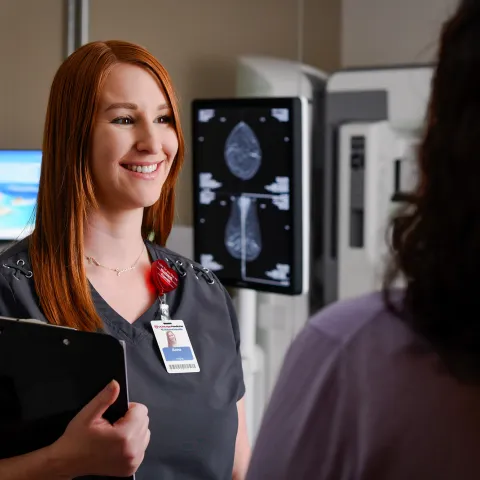
Screening Mammograms Save Lives
The earlier we catch breast cancer, the better we can treat it. That’s why we make it easy to get routine screening mammograms for the peace of mind you deserve. If you’re due for a mammogram, click below to schedule online or call us at 800-595-5602.
Leading the Way With Award-Winning Breast Cancer Treatments
At UChicago Medicine AdventHealth, putting your care at the heart of our mission has put us at the forefront of breast cancer treatments and research. Across our network, you'll find teams leading some of the country's most advanced clinical trials and working closely with leading universities and breast cancer research programs. Our advancements in diagnosis and treatment options, including minimally invasive breast cancer surgery and advanced imaging techniques, have won awards from some of the most noted organizations in cancer care.

Commission on Cancer Accreditation, American College of Surgeons
There is no more information provided for this item
National Accreditation Program from Breast Cancer Centers (NAPBC)
There is no more information provided for this item

Quality Oncology Practice Initiative (QOPI®) Certification, American Society of Clinical Oncology (ASCO)
There is no more information provided for this item

Be Informed, Feel Empowered
Breast cancer is the second most common type of cancer affecting American women, but with advancements in how we detect and treat it, many women can and do overcome it. Our team is here to give you the information and resources to protect your health well into the future. Our downloadable guide answers some of the most common questions about breast cancer, such as:
- What are the causes and risk factors of breast cancer?
- What are the warning signs of breast cancer?
- How is breast cancer diagnosed?
- What are the latest and most advanced breast cancer treatments available?
Answering Your Breast Cancer Questions
Our oncologists are here to answer your questions, and if you’re diagnosed, we’ll ensure you have all the information you need to feel informed and supported.
-
Q:Question: What is breast cancer?
A:Answer:Breast cancer is a disease where cells in the breast grow uncontrollably, forming a tumor that can often be felt as a lump or seen on an X-ray.
Continue ReadingCollapse AnswerIt can develop in different areas of the breast, including the ducts, lobules or connective tissue.
Early detection through regular screening mammograms can significantly improve outcomes, and it’s important to consult a health care provider if you notice anything unusual.
-
Q:Question: What are the different types of breast cancer?
A:Answer:Breast cancer is categorized based on where the cancer originates and whether it is invasive or noninvasive. Understanding these types helps in determining the appropriate treatment and prognosis.
Continue ReadingCollapse AnswerDuctal Carcinoma in Situ (DCIS)
This is a noninvasive cancer where abnormal cells are found in the lining of the breast milk duct. DCIS is considered the earliest form of breast cancer and is highly treatable. Since it hasn’t spread beyond the ducts, it is sometimes referred to as stage 0 breast cancer.
Invasive Ductal Carcinoma (IDC)
This is the most common type of breast cancer, making up about 80% of all diagnoses. IDC begins in the milk ducts and then spreads to the surrounding breast tissue, with the potential to spread to other parts of the body. Early detection and treatment are crucial for effectively managing IDC.
Lobular Carcinoma in Situ (LCIS)
Though called a carcinoma, LCIS is not a true cancer but an indicator that a person has an increased risk of developing breast cancer. Abnormal cells are found in the lobules, which are the milk-producing glands. LCIS itself doesn't spread outside the lobules, but it raises the risk of invasive breast cancer.
Invasive Lobular Carcinoma (ILC)
The second most common type of breast cancer, ILC, starts in the lobules and spreads to nearby tissues. ILC can be more challenging to detect on mammograms than IDC, often appearing as a thickening in the breast rather than a lump. It’s essential to diagnose and treat ILC early to prevent it from spreading further.
There are also other less common types of breast cancer, such as inflammatory breast cancer, triple-negative breast cancer and HER2-positive breast cancer, each with unique characteristics and treatment approaches.
-
Q:Question: Can men get breast cancer?
A:Answer:Yes, men can develop breast cancer, although it is much rarer compared to women. Men have breast tissue, and factors like genetic mutations or elevated estrogen levels can increase their risk.
-
Q:Question: How common is breast cancer?
A:Answer:Breast cancer is the most commonly diagnosed cancer among women worldwide, accounting for a significant number of cancer cases each year.
Continue ReadingCollapse AnswerAccording to the World Health Organization (WHO), in 2020 alone, there were approximately 2.3 million new cases of breast cancer, making it the most prevalent cancer globally. In the United States, the American Cancer Society estimates that about 1 in 8 women (12.5%) will develop invasive breast cancer during their lifetime.
Although breast cancer is much less common in men, they are not immune. About 1 in 726 men will be diagnosed with breast cancer during their lifetime, according to the American Cancer Society.
Regular screening and early detection are crucial strategies for managing breast cancer effectively. Mammograms can help detect breast cancer early when it is most treatable, significantly improving survival rates. For example, the five-year relative survival rate for breast cancer detected at an early localized stage is around 99%, emphasizing the importance of early intervention.
Feel Confident With Oncology Experts in Your Corner
We’re passionate about providing highly personalized and specialized care for numerous types of cancer. Rest assured, our multidisciplinary team of experts will work with you to find the treatment option that’s right for you on your journey to wholeness.
Learn more about other UChicago Medicine AdventHealth General Oncology Specialties and Services.
-
Gynecologic Cancer
We offer leading radiology and surgical technologies to target cervical, fallopian tube, ovarian, uterine, vaginal, vulvar and other reproductive-system cancers.
-
Gastrointestinal Cancer
We provide advanced treatments tailored to address gastrointestinal cancers, including those affecting the stomach, colon, rectum, liver, pancreas and other digestive organs.
-
Lung Cancer
With expert oncologists and top-of-the-line diagnostic testing, the whole-person care at UChicago Medicine AdventHealth is tailored to provide a proactive approach to lung cancer.