When it comes to cancer, any preventive measure is a step in the right direction. If you’re considering at-home cancer test kits, you’re already taking charge of your health in a meaningful way, and we’re here to help you keep that good momentum going.
Just like choosing a healthy diet or exercise regimen, the best cancer screenings are the ones you’ll do. In other words, getting screened is essential, no matter the cancer screening method. Ultimately, the earlier we can catch it, the better we can treat cancer — and the greater your chances of continuing your story into remission.
While they don’t exist for all cancer types yet, at-home cancer screening kits can make it easier and more comfortable to assess your risk and can give your doctor valuable information to inform a diagnosis. We’ll walk you through which cancers you can screen for at home, which ones you still need to see a doctor for and what to know to make the best decisions for you.
Cancer Screenings Start With a Conversation
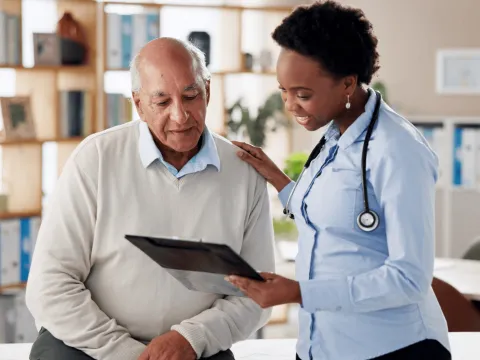
Before you look into at-home cancer test kits, talk with your trusted primary care doctor. They know your health history and risks and can tell you which cancers to screen for and when. Once you have this foundational first piece, you and your doctor can compare the available home test options and determine the right combination with in-person screenings to best protect your health.
At-Home Cancer Test Kits 101
At-home cancer screening tests are kits that you can use to collect a sample (like a stool sample or vaginal swab) at home to send for testing in a lab. These tests look for specific biomarkers like antibodies or mutated genes that could indicate cancer before symptoms appear or reveal a greater risk of developing it later.
How They Work
At-home cancer screenings include self-testing for cancer, where you collect the sample and interpret the results yourself with guided instructions. More commonly, they’re self-collection tests, where you send your sample to a lab and receive the results electronically when they’re ready. In some cases, the test could be ordered but may need to be collected and analyzed at a lab.
Your results may be negative, meaning that the test didn’t identify any markers for cancer or positive (markers found). Test kits aren’t perfect, though, and the risk of a false-positive or negative is always present. Your doctor should review all results, especially positive ones, to confirm that they’re accurate.
Most importantly, know that these kits are not definitive diagnostic tests for cancer. They can give you insights, but they can’t replace an official cancer diagnosis from a doctor.
Who Can Benefit
At-home tests are meant for people with an average risk of cancer who meet the screening guideline recommendations and aren’t experiencing any symptoms that could point to cancer. An at-home test can make it easier for many people to get screened for cancer, with benefits like:
- Accessibility: At-home medical tests are ideal for people with limited access to healthcare services, like those living in rural communities or with mobility challenges.
- Convenience: Busy professionals and working parents can take the tests when it works for their schedules instead of trying to fit in an appointment.
- Easier participation: At-home tests can make it simpler to stick to the screening schedule that your doctor has already outlined for you.
- Privacy: Samples can be collected in the safety and comfort of home for peace of mind.
Talk with your doctor about at-home cancer test kits. They’ll help you determine if they’re a right fit for you based on your cancer risk and health history. People who have a personal or family history of cancer or are experiencing concerning symptoms should opt for in-person, conventional screenings with a healthcare provider for a more thorough and personalized exam.
Cancers You Can Screen for At Home
National public health authorities like the American Cancer Society and Centers for Disease Control and Prevention recognize at-home screening options for two main cancer types: colorectal and cervical cancers.
At-Home Screenings for Colorectal Cancer
A colonoscopy is the gold standard to catch colorectal cancers early, when they’re easiest to treat. While this lifesaving screening must be done in person, at-home stool tests can be a great first step that gives your doctor valuable information about your colorectal health and cancer risk.
Fecal Occult Blood Tests and How to Do Them
At-home stool tests can reveal hidden (or occult, in medical terms) blood in stool samples that can’t be seen with the naked eye. A fecal immunochemical test, or FIT, looks for trace amounts of blood in stool from the lower digestive tract that may indicate the presence of cancer or polyps.
To do a FIT, you’ll receive supplies from your healthcare provider, including test cards or tubes, long brushes, a mailing envelope and more. Follow the detailed instructions that your kit includes and return the samples within 24 hours.
Stool DNA Tests and How to Do Them
Another type of colon cancer screening you can do at home is a stool DNA test like Cologuard, which looks for changes in your DNA that may be caused by colorectal cancer cells. This test checks for bleeding from the lower digestive tract and changes in your DNA that may indicate cancer or increase your risk of developing it.
Your stool DNA test kit will include everything you need to collect your stool sample, including a bottle of liquid preservative, labels, a FIT and a shipping container. Follow all instructions included in your kit to collect your sample, and return it as instructed.
Test Accuracy and Results
Medical research shows that FIT has a high accuracy rate in detecting colorectal cancer. The healthcare provider who recommended the test kits will go over the results with you. They’ll want to confirm a negative result (no blood or DNA changes) is accurate and will review your other risk factors to determine your best next step. If your at-home test shows blood or DNA changes in your stool, your doctor will perform a colonoscopy to investigate further and rule out other causes of blood in the stool, like a hemorrhoid.
Key Takeaways for At-Home Colorectal Cancer Screening
- Who should do it: Anyone with an average risk of colorectal cancer, starting at age 45.
- When to do it: Fecal occult blood tests once a year and stool DNA tests once every three years.
- Benefits: No bowel preparation or special diet is needed, and it can be done in the comfort of home.
- Limitations: Must be done more often than a colonoscopy, may not detect polyps and some cancers (false-negative) and could have false-positive results. Any abnormal result will require a follow-up colonoscopy.
Screening for Cervical Cancer At Home
In the past, only Pap tests (also called Pap smears) tested for cervical cancer. As new research has shown that most cases of cervical cancer are caused by the human papillomavirus (HPV) — which a Pap test can’t detect — HPV testing has been added to the American Cancer Society’s guidelines for cervical cancer screening. Self-collection options to test for HPV are now FDA-approved and recommended, and these tests are highly accurate and easy to do.
A healthcare provider can order the test kit for you. They’re recommended for people who’ve never had an abnormal Pap test result, have no signs or symptoms of cancer, don’t have easy access to healthcare, experience anxiety or pain during pelvic exams or have difficulty arranging childcare or transportation. These at-home tests are not recommended for people who are experiencing symptoms or have had an abnormal result in the past.
How to Use It
A self-collected HPV test involves inserting a long, soft cotton swab into the vagina to collect cells that will be analyzed in a lab. The test can be done privately in a doctor’s office or at home.
Test Accuracy
The American Cancer Society has affirmed that self-collection for HPV (at-home testing for cervical cancer) is just as accurate as a sample taken in an office by a healthcare professional.
Understanding Your Results
Any abnormal or positive result will require timely follow-up testing, including a pelvic exam with a cervical sample collected by a healthcare provider, to confirm your results. Additional testing may be needed as well.
Key Takeaways for At-Home Cervical Cancer Screening
- Who should do it: Anyone with a cervix and an average risk of cancer, starting at age 25.
- When to do it: Self-collect every three years as long as results are normal or negative.
- Benefits: Highly accurate, FDA-approved and easy test that can be done in the privacy of home.
- Limitations: Tests must be ordered by a healthcare provider, and an in-person screening is required if abnormal or positive results show up.
How Telehealth Supports At-Home Cancer Screenings
A telehealth, or virtual, visit with a healthcare provider is an affordable, convenient way to get the care you need. It can support at-home cancer screening at every step by:
- Allowing a provider to recommend tests
- Answering your questions about at-home vs. in-person cancer screenings
- Getting a referral to a specialist instead, if needed
- Helping you order appropriate tests
- Reviewing your results before or in addition to discussing them with your primary care provider
To get started with telehealth for cancer screening, explore the AdventHealth app.
When an In-Person Cancer Screening Is Needed
Cancers that still require in-person screenings include:
- Breast cancer, which requires a screening mammogram
- Lung cancer, which requires a computed tomography (CT) scan
- Prostate cancer, which may involve a prostate-specific antigen (PSA) blood test and digital rectal exam (DRE)
- Skin cancer, which involves a close examination and sometimes photos of the skin in person
While at-home and virtual care are getting better every day, in-person visits are still necessary for:
- Biopsies to confirm if cancer is present in a tissue sample
- Diagnostic testing after an initial screening for further investigation
- Imaging tests of the lungs or other vital organs to view their structure and function
- Ongoing cancer care, like radiation and chemotherapy
Choosing the Right At-Home Cancer Test Kit
When you’re weighing your options, consider factors like:
- Clinical validation: It’s a good idea to look up the brand on the Better Business Bureau’s website and read reviews to ensure clinical validation and business credibility.
- Consultations and support: Double-check whether the company offers a free virtual consultation with a healthcare provider where you can ask questions, or a virtual chat or helpline for support at home while taking the test.
- FDA approval: Some at-home cancer tests are FDA-approved, but others are not. It’s worth a little digging online to find the answers for your peace of mind.
- HIPAA compliance: Your health data privacy is of the utmost importance. Double-check that the brand you’re interested in is compliant with HIPAA regulations.
- Laboratory quality standards: Look for “CAP-accredited” or “CLIA-certified” labs for a sure sign of quality.
Most of this information should be discoverable online on a test kit brand’s website, but if you can’t find it easily, talk with your healthcare provider and get their recommendations.
Questions to Ask Before Purchasing an At-Home Cancer Test
As with any concern, asking questions helps you better understand your health and the kind of care that’s right for you. Before buying any kind of at-home cancer test, start by asking your trusted healthcare provider questions like:
- Which kind of cancer does this specific test screen for, and how?
- Is this at-home test recommended by clinical guidelines for cancer screening, or is there a different type of test I need?
- Is this at-home test approved by the FDA? If not, what are my other options?
- What are the benefits and risks of this at-home test versus a conventional screening?
- How often should I do this test at home (e.g., once a year, once every three years, etc.)?
- What happens if the result is abnormal or positive? Will I need in-person testing?
- Can I use my health insurance to cover the cost of the at-home test?
Once you have the answers to these questions and any others you might think of, you’ll be able to make informed decisions about the at-home tests you’re interested in and the right screening schedule for your needs.
How to Use an At-Home Cancer Test Kit
Using your at-home test kit involves these steps:
- Ordering the test from your healthcare provider or online if they recommend it.
- Collecting the sample by following all of the detailed instructions included in your test kit (collection may be done at home or in a private area of a doctor’s office).
- Mailing the specimen in the shipping container provided in your kit so it can be sent to a lab for further analysis.
- Receiving your results from the lab (delivered electronically), so you can discuss them with your healthcare provider.
Be sure to follow the instructions in your test kit closely, reading them several times if needed, to avoid common mistakes such as improper sample collection. Ensure your sample is mailed within the timeframe listed in your instructions (often 24 hours), and keep any follow-up appointments your doctor has scheduled after your at-home test.